Key change: net billing since 9 Feb 2026New rooftop solar connections are billed under net billing: grid units are charged at your tariff and exported units are credited at the national average energy purchase price. Existing valid net-metering agreements keep their old terms until expiry.
Net metering vs net billing نیٹ میٹرنگ بمقابلہ نیٹ بلنگ
| New connections (net billing) | Existing net-metering agreements | |
|---|---|---|
| Grid units you use | Normal tariff (slab or time-of-use) | Normal tariff |
| Units you export | National average energy purchase price (Rs 8.13/unit, April-June 2026) | Old rate (Rs 25.32/unit, April-June 2026) until the agreement expires |
| Surplus value | Credited to next bill or paid quarterly | As per existing agreement |
| Agreement length | 5 years from commissioning, renewable by mutual consent | To original expiry; renewals move to the 2026 terms |
Rates are from NEPRA’s adjustment decision as summarised by PowerPost; NEPRA reviews them regularly, so check your bill for the rate actually applied.
Net-billing bill estimator
Enter monthly units and your tariff. The export rate is editable.
Typical steps to connect solar to the grid
- Get a site survey and design from a registered installer.
- Apply to your electricity distribution company (DISCO) with the required documents and design.
- Install and have the system inspected.
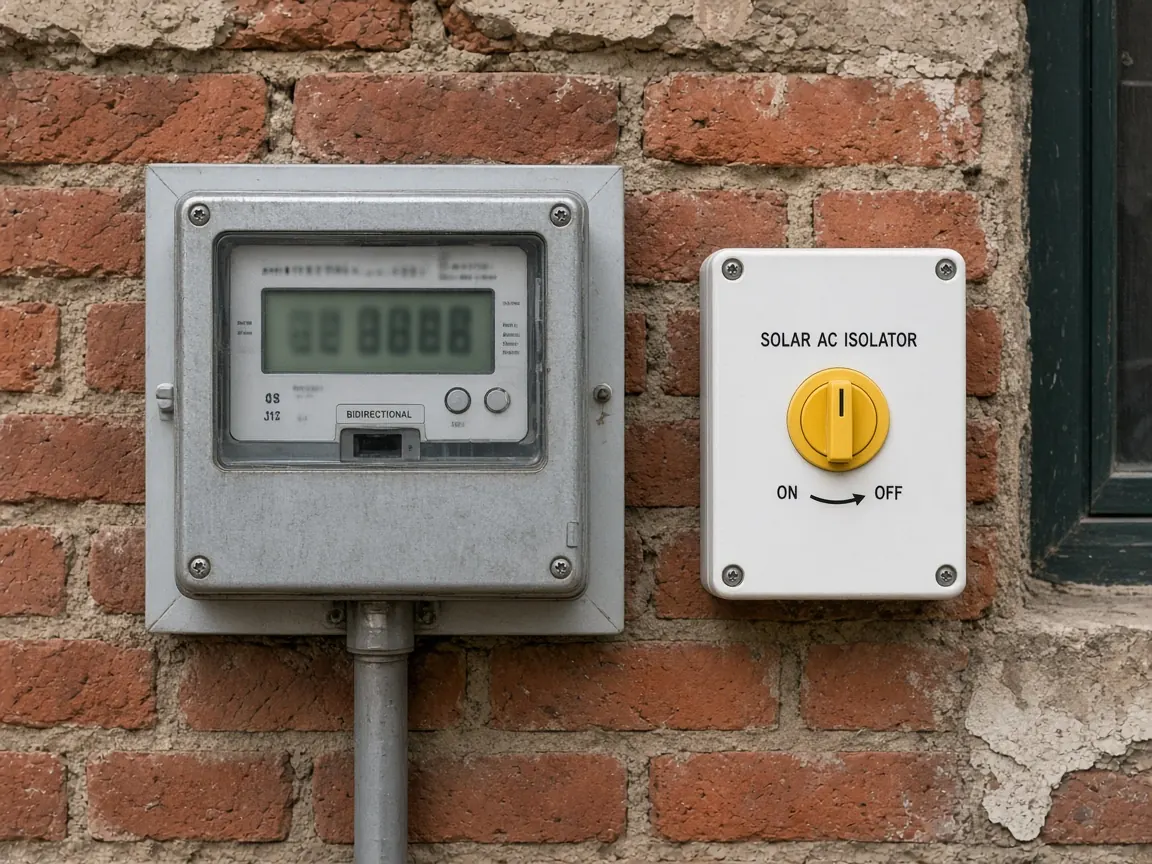
- Sign the agreement and have the bidirectional meter installed.
Procedures and fees vary by DISCO; confirm requirements with your DISCO and installer.
What this means for system size
- Because exports earn much less than the tariff you pay, size to your daytime consumption, not to “zero bill”.
- If most of your use is in the evening, consider a battery (hybrid) system. See prices.
- Check your own bill with the calculator.
FAQs
Is net metering still available in Pakistan?
No, not for new connections. Since NEPRA’s Prosumer Regulations 2026 (notified 9 February 2026), new solar connections use net billing. Valid agreements made under the old 2015 rules keep their old terms until they expire.
What rate will I get for exported units?
Regulation 14 says exported units are credited at the national average energy purchase price. NEPRA’s adjustment decision for April–June 2026 used Rs 8.13 per kWh for net billing (and Rs 25.32 for old net metering). Some news reports quoted about Rs 10–11. NEPRA can revise it.
Does adding panels affect my old net-metering agreement?
According to PowerPost’s guide, the protection ends if you materially modify the system so its maximum output changes (for example adding panels or a bigger inverter), which can move you to net billing.
Is solar still worth it under net billing?
For many homes the main saving now comes from the units you stop buying, because exports are credited at a much lower rate than the tariff you pay. This usually favours sizing the system to your own use, and sometimes adding a battery. Use the calculator and your own bill to check.